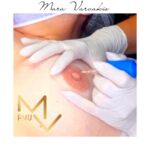
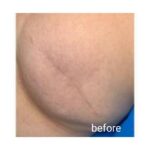
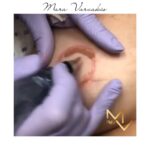
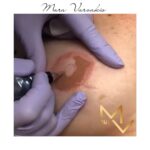
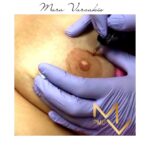
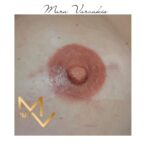
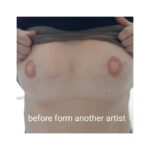
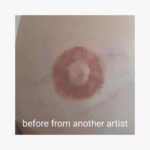
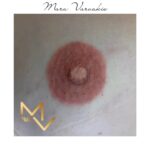
Medical areola tattooing is much more than just a technique. It is the final, symbolic touch in the journey of restoration after a mastectomy. With a natural result and absolute respect for the body, it helps many women regain their image and feel whole again.
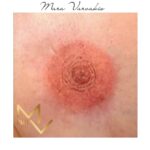
With specialized pigments and 3D techniques, a realistic areola is created that harmonizes with each woman’s skin and anatomy. The result is not just aesthetic — it is deeply empowering.
Paramedical dermopigmentation, nipple tattooing—as the term “medical tattoo” has been established in the Greek language—after a mastectomy gives women the opportunity to restore a realistic nipple and areola (the pigmented skin around the nipple), according to their original appearance, without the need for surgical intervention.
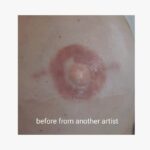
Cases in which nipple and areola reconstruction can be applied include: after a mastectomy, in cases of lack of pigmentation, discoloration, after breast reduction or augmentation surgery, and redefining a new areola contour (smaller or larger) based on the existing one.
It will go through three healing stages: healing, peeling, and absorption. This period lasts approximately 45 days, after which a follow-up session is performed to complete the technique and achieve a flawless result.
It remains on the skin for many years; however, the procedure may need to be repeated after approximately 5 years to refresh the color. The color selection is based on the shade of the nipple of the other breast, and the existing one can also be color-corrected if needed. The pigments used are produced under strict regulatory guidelines and are approved for this specific use.
Nipple tattooing can be performed approximately one month after breast reconstruction, in consultation with the attending physician. In some cases, the doctor surgically reconstructs the nipple using local skin flaps—meaning the projection (nipple) is created using skin from the breast—resulting in an even more realistic outcome.
However, even in cases where there is no nipple projection, a highly realistic three-dimensional effect can be achieved using specialized 3D techniques with shading, closely resembling the original appearance of the areola.
Painless, bloodless, and with a natural result, the procedure takes no more than 60 minutes, allowing a woman to regain her feminine confidence and significantly improve her psychological well-being.